

From Trials to Policy: The Vetiver Ecosystem Framework for a Resilient Future

"Vetiver Ecosystem: From Trials to Policy"

For almost forty years, Vetiver Grass Technology (VGT) has been tested, refined and proven on real slopes, roads, farms, landfills and waterways across the world. We are not in the experimental phase anymore. Today, the real challenge is to move from scattered pilot projects to serious policy, standards and large‑scale implementation.
At Vetiverse, we call this new step the "Vetiver Ecosystem". It is a holistic framework that brings all Vetiver applications together and helps governments, agencies and corporations use VGT with confidence and clarity.
What Is the Vetiver Ecosystem?
The Vetiver Ecosystem is a way of thinking and planning that connects every use and application of Vetiver grass (VGT) into one living system. Instead of treating each project as an isolated “trial”, it shows how Vetiver supports land, water, infrastructure and communities all at the same time.
Within this ecosystem, Vetiver grass becomes a nature‑based tool to:
- Stabilise slopes and stop erosion
- Protect roads, railways and embankments
- Improve water quality and reduce sediment
- Support farms, soil health and rural livelihoods
- Store carbon and increase climate resilience
- Create habitat and support biodiversity
- Sub-Economies Development (Handcrafts, Building material, Energy and more)
The Vetiver Ecosystem is not just about planting grass. It is about using a proven biological system, supported by modern design and monitoring, as a normal part of how we plan and manage land and infrastructure.

Proven, Not Experimental
Many people still see Vetiver as something “new” or “experimental”. This is no longer true. VGT has nearly four decades of research and field experience behind it, in tropical, subtropical and semi‑arid regions, on many soil types and under very different conditions.
We already know that Vetiver can:
- Grow deep, strong root systems that anchor soil and increase slope stability
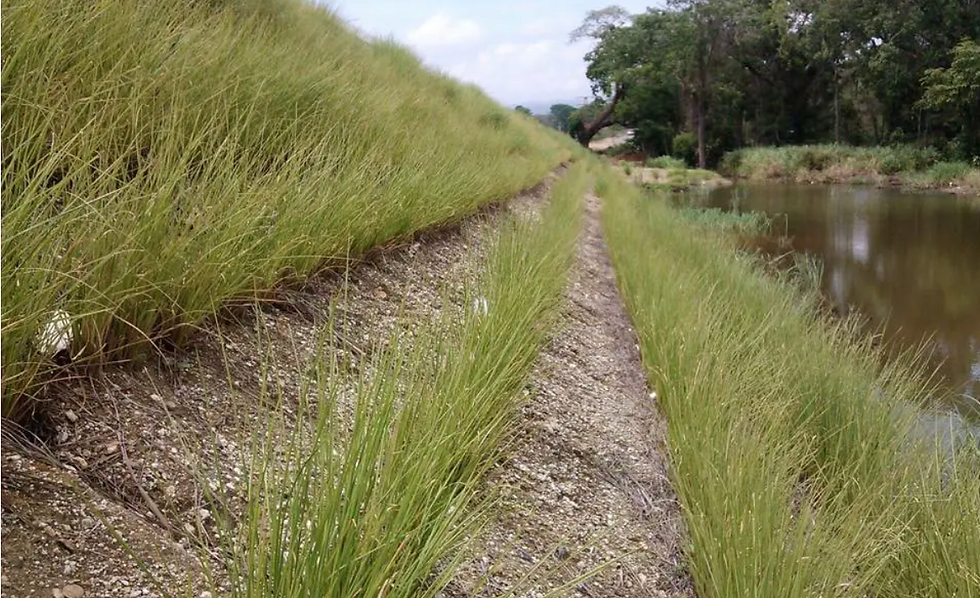
- Form dense hedgerows that slow water, trap sediment and reduce gully and surface erosion
- Take up nutrients and some pollutants, helping to clean farm runoff and wastewater
- Survive droughts, floods and poor soils with low maintenance once established
There are thousands of successful sites worldwide where Vetiver is protecting roads, rail lines, farms, riverbanks, landfills and industrial areas. The question now is not “does it work?” The question is: how do we scale and integrate this proven solution into policy and everyday practice?
Why Policy Makers and Corporations Should Care
Governments, regional councils and companies face growing pressure from climate risk, land degradation and environmental regulations. At the same time, budgets are tight, especially in developing countries. The Vetiver Ecosystem offers a simple, cost‑effective and nature‑based way to address all these pressures together.
For policy makers, the Vetiver Ecosystem can:
- Turn isolated vetiver projects into a clear national or regional strategy
- Support guidelines for erosion control, road design, watershed management and mine rehabilitation
- Help meet targets for climate adaptation, water quality and land restoration
- Support Community development projects.
For corporations, the Vetiver Ecosystem can:
- Protect assets such as roads, pipelines, tailings and industrial sites from erosion and flooding
- Improve ESG performance through visible, nature‑based solutions
- Reduce long‑term maintenance and rehabilitation costs by stabilising sites with a living system
When we see vetiver as part of a wider ecosystem, it is no longer just a “green add‑on”. It becomes a smart, low‑risk investment in resilience.
The Four Pillars of the Vetiver Ecosystem
To make this framework easy to use, we describe it through four simple pillars.
1. Field‑Proven Applications
All core Vetiver VGT uses are already tested and working. These include:
- Erosion and landslide control on slopes and embankments
- Protection of roads, railways and riverbanks
- Treatment of farm runoff, drainage channels and some waste streams
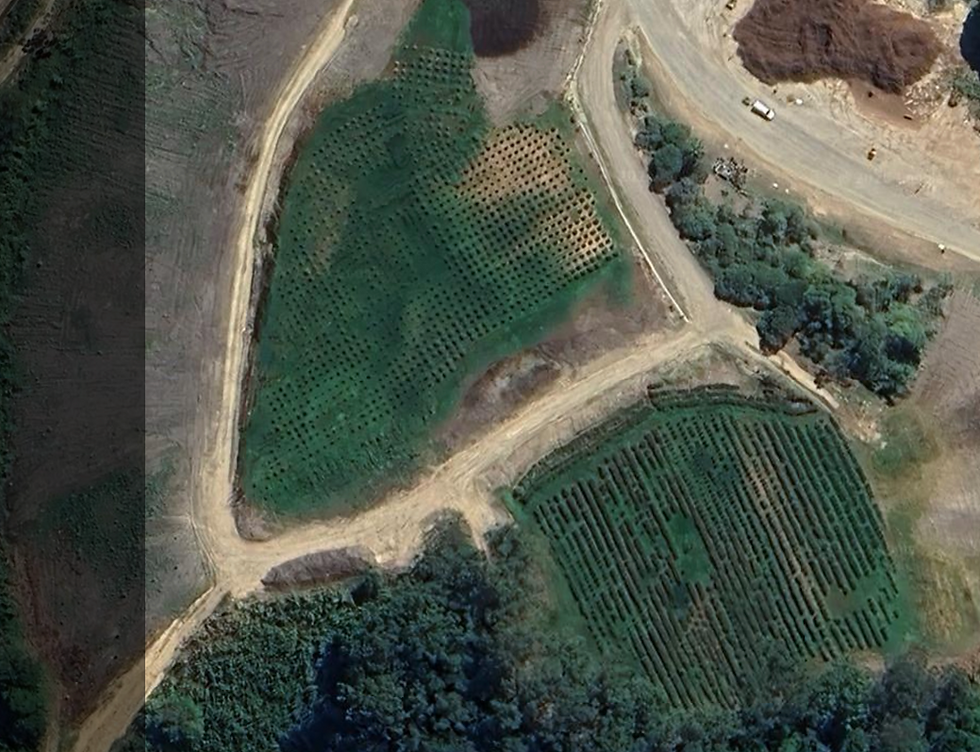
- Rehabilitation of degraded lands, mines and landfills
This pillar reminds us: we are not inventing from zero. We are building on a strong base of proven practice.
2. Integrated Design and Planning
Vetiver works best when it is part of the design from the beginning, not added at the last minute. In the Vetiver Ecosystem, VGT is included in:
- Road and rail manuals
- Watershed and catchment plans
- Farm layouts and soil conservation plans
- Urban and industrial green infrastructure design
- Social Development Planning
This integration makes Vetiver a normal, accepted option inside engineering and planning documents.
3. Technology and Monitoring
Modern tools help us move from “nice stories” to real data. The Vetiver Ecosystem encourages the use of:
- Simple mapping and risk assessment to find priority sites
- Clear design standards and spacing for different applications
- Monitoring of survival, root development, erosion reduction and water quality
- Digital platforms where results can be shared and compared
This pillar connects the natural power of Vetiver with the kind of evidence that engineers, financiers and regulators need.
4. Policy and Governance
The final pillar is where real change happens. The Vetiver Ecosystem offers a base for:
- National and local guidelines on using VGT
- Standard drawings, specifications and tender language
- Incentives and support schemes for landholders and developers
- Inclusion of vetiver systems in climate, resilience and ESG strategies (Environemtal, Social, Governance)
With these tools, Vetiver moves from “project by project” to a recognised part of national and corporate policy.
From Pilot Sites to System Change
We already have enough evidence to know that Vetiver Grass Technology works. What we need now is courage and structure to change the scale.
- Instead of repairing the same slope every few years, we can stabilise it once with a living system.
- Instead of building only concrete structures, we can combine them with green solutions that grow stronger with time.
- Instead of keeping vetiver in small “demonstration plots”, we can write it into policies, standards and contracts.
The Vetiver Ecosystem gives us the framework to do this, especially in developing countries where nature‑based, low‑cost solutions can make the biggest difference.

How Vetiverse Can Support You
At Vetiverse, our mission is to help move the world from trials to transformation. We work to:
- Translate decades of vetiver experience into clear frameworks and simple tools
- Support governments, councils and companies in designing and implementing Vetiver systems and Vetiver Ecosystem
- Build local capacity so that communities and practitioners can manage these systems for the long term
If you are ready to move beyond experiments and start building resilience at scale, the Vetiver Ecosystem is here for you. Together, we can turn proven knowledge into policy and practice that protects land, water and people.

Comments